Rick Warren on Vocation
 The following quotes on vocation are attributed to Rick Warren
We serve God by serving others. The world defines greatness in terms of power, possessions, prestige, and position. If you can demand service from others, you’ve arrived. In our self-serving culture with its me-first mentality, acting like a servant is not a popular concept.
I’ll take a person who’s humble and has integrity over a person who has vision any day. A lot of people have vision just based on ego, but it’s in that dependence upon God that we get His vision and develop more trust in Him.
If God only used perfect people, nothing would get done, … God will use anybody if you’re available.
You never know God is all you need until God is all you have.
God is looking for people to use, and if you can get usable, he will wear you out, … The most dangerous prayer you can pray is this: ‘Use me.’”
You were made by God and for God, and until you understand that, life will never make sense.
Faithful servants never retire, … You can retire from your career, but you will never retire from serving God.
Rick Warren is pastor of Saddleback Church and author of numerous books including The Purpose Driven Life. To investigate the individual and communal aspects of calling and profession more deeply and personally consider examining the devotional Profession-als: Men and Women Partnering with the Trinity in Everyday Life.
Undergraduate ‘Calling’ ….
I’ve been reviewing different Christian College websites looking for their understanding and academic philosophy of career, calling and profession.
In 2001 Messiah College received a Lily foundation grant to better understand and explore the concept of vocation. The third portion of that grant was dedicated to the integration of faith and vocation (which is interesting because in my mind vocation actually implies that faith is already integrated …. what is a ‘Vocare’ (or calling) without a Caller.) See more of that in Professionals: Men and Women Partnering with the Trinity in Everyday Life. Let me share with you a summary of the third goal of the Messiah College project taken from their website:
Goal #3: Integration of Faith and Vocation
The third goal of Christian Vocation—Integration of Faith and Vocation—promotes the understanding and integration of Christian vocation across the spectrum of liberal and applied studies throughout curricular and cocurricular programming. This goal corresponds to the third part of our definition of Christian vocation— gifts and guidance in preparation for life’s work—that is, being self-aware of one’s personal gifts and talents and having a relatively focused sense of how God wants these to be used for the benefit and improvement of people around the world… The following initiatives promote the understanding and integration of Christian vocation …
- Educator Development… assists faculty, cocurricular educators, staff, and administrators to develop the knowledge, skills, and enthusiasm necessary to implement the College’s renewed emphasis on Christian vocation.
- Campus Culture… nurtures a community ethos grounded in shared vocational understanding. It assists students to make connections among their faith, studies, relationships, gifts, and career goals.
- Career Exploration… facilitates student self-awareness of gifts and talents, the understanding of personal calling, and the exploration of work opportunities.
It is interesting to me that in terms of the ‘three tiered’ Professionals paradigm, the focus of most Christian College Education is focused on personal development and giftedness exploration. In the Career > Calling > Profession progression this is limited to the transition between Career and Calling. Much more could be done at the mentoring and leadership (Profession) levels with a more developed understanding of vocation. However undergraduates often lack the life experience for such educational experience and application to take hold beyond the theoretical level.
So I guess that leaves the church to pick up where academic institutions leave off (if integration really ever was their responsibility to begin with!) What can be done to link the church to vocational education in more pragmatic and action oriented ways. I’d love to hear what you might think about the possibilities that exist out there; what are some stories that you have heard.
The church body that our family belongs to holds classes on Work and Faith as part of an applied theology Sunday School track for application oriented teaching. We recently commissioned a couple who had thought through vocational issues and saw themselves as uniquely sent by the church into a foreign culture, away from our fellowship, we partnered to love them just as we would other financially cross cultural workers. They (like every other member) were missionaries into the context that God had prepared for them, but that context happened in this case to be cross cultural away from our local church. Which is a core of the understanding that we have in building and developing believers that care for and impact their communities and culture for the sake of the gospel.
The other piece of information worthwhile noting (in the Messiah context) is that there is also a sacred/secular split approach to ministry and calling present within the understanding of vocation …. at least the one presented at first on the website. As a result of this assumption, it will be interesting to see how well ‘full’ a theology of work faith integration can be developed as a result of that assumption. (See figure below for an illustration of the approach …. I wonder what happens to the possibility of calling outside of ‘ordained’ vocations.)

Vocational Discernment
 I was encouraged by the following reflection on vocational discernment by Father John English and amazed at the overlap of terms and concepts present in this post vatican II understanding of vocation. The one caveat that I have is that much time and energy is spent on what I believe is an overemphasis with married, single or religious callings. With that said I am sympathetic to the pressures that moving exclusively into a religious calling brings in the life of a follower of the Roman Catholic church that isn’t prevalent in Protestant circles… there also seems to be a slight sacred/secular dichotomy that is related to this tension, that appears less often in Protestant circles. Here is what Father English had to say:
Reflective persons, especially those who are trying to discover the basic direction and commitment of their lives, realize that there are myriad voices beckoning them to give full attention to these calls. The sirens and the prophets are everywhere. How do persons discover true calls from the Lord and the way they are to respond? How do persons discern their life vocation?
… Vocation comes from the Latin word for call or calling. It implies that there is an action from God who is beyond ourselves that is beckoning and calling to us. In a sense, we cannot deny this activity. We respond to it by answering yes or no. To ignore it is to answer no. Our belief is that God calls each one of us to do some good in this world. We are called to be concerned for other human beings, to be instruments of his love, peace and justice.
Some persons experience being called by God as an invitation into the desires (dreams) of God for the human race, for the church, and for ourselves as we live out our lives. God has a dream for each one of us. We are uniquely loved and called by God. God only wishes good for us as a human race and as individuals. God’s dream is that we in our own unique way will join Christ in building a better world and so experience ourselves fully … Our very existence is shaped by the experiences of call. In fact, the whole human race and the church are in a dialogue of call and response with God. This dialogue, in a mysterious way, expresses the activity of Christ to transform the world into Himself. Our own dialogue of call and response is part of this transformation of the world…all of us are called to respond to these calls and to discover who we are and what our role is in this world. Moreover, this dialogue is to be our continual way of life.
This applies especially to Christians, for our basic call is to be other Christ’s. Christ is not only the call but also the response. We are to respond constantly to the Lord’s call, “Come, follow me.”, much as he responded to his Father and to the needs of the human race. We are all called to develop the full potential of the human in ourselves and in other persons. Our response is to encourage the seed of the divine in all of us and enable us to love as Christ does: “Love one another as I have loved you.” (John 15:12). … we are to live out Christ’s words … St. Ignatius Loyola expresses our purpose and goal in this way: God’s purpose in creating us is to draw forth from us a response of praise, reverence, and service to God (like that of Christ) and in this way to experience the fullness of being.
This quote was taken from a Canadian Jesuit website where Father English spent his career. For a more thorough treatment of the history of calling and work and the distinctives found during various points in history consider reading “Professionals: Men and Women Partnering with the Trinity in Everyday Life”
The Core Uniting Discipline
 I was struck by the recent “Life Integration” comments of Dr Neil Neilson from Covenant College at graduation this past year. He is spot on that Biblical Calling puts leadership in its proper context; those who know the Caller are uniquely positioned to be courageous when others aren’t, to lead when no one is watching and care when others are careless:
Here is what he says ( the complete talk is available at his blog)
[P]rofessionals should have basic knowledge spanning crucial areas like natural science, health science, engineering, public policy, and management … basic knowledge is needed to harness and coordinate the insights that are constantly emerging from a relevant range of fields… to understand how the various disciplines relate to and inform one another. We should expect such mutual relation … [However F]oundational convictions about the beauty and variety of God’s creation. … [prepares leaders] exactly as they should … for what lies ahead. We don’t do what we do for purely pragmatic reasons; our belief [is] that … education should be interdisciplinary from beginning to end is [based on our convictions] and flows from a biblical and reformed theology.
For a more in depth study of the Biblical and Reformed view of calling and this ‘Uniting Discipline’ being brought about by the Trinity in our daily lives consider taking a peek at Professionals: Men and Women Partnering with the Trinity in Everyday Life.
Thoughts on Work Life ‘Balance’
 The following quote about Work Life Balance is a synopsis from The OneLife Solution by Dr Henry Cloud and is taken from pgs 9-19. I was intrigued when I discovered it in his book andslimmed down 10 pages to less than 10 paragraphs. He actually promotes the idea of integration rather than balance; which is a core concept highlighted and expanded in “Professionals: Men and Women Partnering with the Trinity in Everyday Life.” Here is what he says –
… Satisfaction in one’s work, and often in one’s life, is directly related to the emotional, relational, and performance aspects of work. In fact, people also change jobs for one of these three reasons: how it feels to be there, how the relationships are going, and how much success or fulfillment of their talents and passions they are achieving… [Success becomes] all about who you are, not where you are. The where will take care of itself if you are who you need to be… people [often] think that the answer is somehow “out there.” If they just could find the right company, then they would be happy. If they just had a different boss, then they could really soar. If the market were just a little better, then they could be successful… While there is truth in the difficulty of [these] situations, the real and most powerful truth that you can do anything about is yourself.
… The obstacles that prevent a person from becoming a structured and defined character take root when the normal developmental path is interrupted, hindered, broken, or not properly resourced in some way. Some people get further along in that path … than others, but most of us have encountered situations that tell us we have room to grow and that, if we did, our performance and well-being would benefit… today life has become so fragmented that people find it difficult to “bring it all together.” … People look to balance work and life, as if they sit on some sort of fulcrum or seesaw and the answer is to some how get them to be equal. I guess that means adding or subtracting from one side or the other, which certainly has some merit. But I prefer a different idea.
Instead of balance, let’s talk about “integration of work and life”—but not in the way that means to take one to the other in more and more ways. The integration I prefer is not about the space and time boundaries of work and life themselves but the integration of the person who is doing both of those—you. As you integrate all of your different parts into one person—one core from which you do all that you do, including work, life, relation ships, spirituality, health, and other parts—you will achieve balance as a by-product.
Balance will be a fruit … that will integrate your personality. Then you will not feel torn between many lives and be many different people, but one person, one life, with many different parts—none of them able to pull you apart from the others. That is the essence of one life… throughout all of it, we will be integrating life and work. Remember, this is about you as a person. It is not just about work problems and situations or personal problems and situations. This is about you, the person who has to live in both of those worlds. The intent is not necessarily to bring both of them together, but to bring you together to live in both worlds in an integrated way. As you integrate, you will be able to live more and more from a strong core, and create the life you were designed to live. The one life that only you can live, and live well.
To study the concept of integrating work and life in lieu of balancing and success and ‘fruitfulness’ as a byproduct of an integrated life consider reading “Professionals: Men and Women partnering with the Trinity in Everyday Life” by Robert W Alexander
Tim Keller on Faith and Work / Great Commission
I thought the following Tim Keller interview was very helpful in understanding the need for Work/Faith integration and the need for Profession-als to put their faith into words.
People need to have a foundation of ‘Career’ and ‘Calling’ before they share their faith in the workplace which remains as it has for thousands of years, the best place for evangelism.
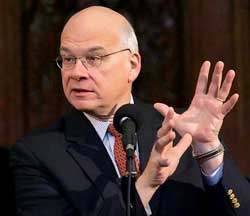
Tim Keller – Here’s Life Interview
One of Keller’s key points is the critical nature of the Church providing the tools, resources, modeling and teaching to its people how to integrate their faith with their work, especially in urban centers because cities tend to have more vocationally focused people (people who live to work, vs. work to live), so building educational ministries such as are almost mandatory if there is to be any impact on these types of individuals.
I hope more churches can put efforts and resources into Work / Faith integration in the years ahead. The progress these days is encouraging.
Small Group Study Plans 8, 10 and 34 weeks
I’ve heard from a number of you that they want to use ‘Profession-als: Men and Women Partnering with the Trinity in Everyday Life’ as a springboard for small group or Sunday School class discussion. Based on the number of weeks that the group would like to meet here are some suggested breakdowns for discussion. Cut and paste to develop your own syllabus for use in your own group
Lightning Speed: 8 Weeks (To let material sink into your mind)
Week1 Chapters 1&2
Week 2 Chapters 3&4
Week 3 Chapter 5
Week 4 Chapter 6
Week 5 Chapter 7
Week 6 Chapter 8
Week 7 Chapter 9
Week 8 Chapter 10
Fast Track: 10 Weeks (To let material work into your soul)
Week 1 Chapter 1 (Read first chapter in group on first night …)
Week 2 Chapter 2
Week 3 Chapter 3
Week 4 Chapter 4 (See ‘Supplemental Materials’ for handouts for this week.)
Week 5 Chapter 5
Week 6 Chapter 6
Week 7 Chapter 7
Week 8 Chapter 8
Week 9 Chapter 9
Week 10 Chapter 10
Devotional Speed: 34 Weeks (To let material change your heart, soul, and mind)
Week 1 Chapter 1 (Read first chapter in group on first night …)
Week 2 Chapter 2
Week 3 Chapter 3
Week 4 Chapter 4 (See ‘Supplemental Materials’ for handouts for this week.)
Week 5 Chapter 5, Moment of Truth 1
Week 6 Chapter 5, Moment of Truth 2
Week 7 Chapter 5, Moment of Truth 3
Week 8 Chapter 5, Moment of Truth 4
Week 9 Chapter 5, Moment of Truth 5
Week 10 Chapter 6, Moment of Truth 6
Week 11 Chapter 6, Moment of Truth 7
Week 12 Chapter 6, Moment of Truth 8
Week 13 Chapter 6, Moment of Truth 9
Week 14 Chapter 6, Moment of Truth 10
Week 15 Chapter 7, Moment of Truth 11
Week 16 Chapter 7, Moment of Truth 12
Week 17 Chapter 7, Moment of Truth 13
Week 18 Chapter 7, Moment of Truth 14
Week 19 Chapter 7, Moment of Truth 15
Week 20 Chapter 8, Moment of Truth 16
Week 21 Chapter 8, Moment of Truth 17
Week 22 Chapter 8, Moment of Truth 18
Week 23 Chapter 8, Moment of Truth 19
Week 24 Chapter 8, Moment of Truth 20
Week 25 Chapter 9, Moment of Truth 21
Week 26 Chapter 9, Moment of Truth 22
Week 27 Chapter 9, Moment of Truth 23
Week 28 Chapter 9, Moment of Truth 24
Week 29 Chapter 9, Moment of Truth 25
Week 30 Chapter 10, Moment of Truth 26
Week 31 Chapter 10, Moment of Truth 27
Week 32 Chapter 10, Moment of Truth 28
Week 33 Chapter 10, Moment of Truth 29
Week 34 Chapter 10, Moment of Truth 30
I was privileged to interact this spring with a professional in my local community (Jeff) who was starting up a medical oriented business that he ‘wanted to glorify God.’ He asked me if we could gather together to discuss the possibilities and look at his business plan.
What a great opportunity to thinking about career, calling, and profession within a business. We also had a great opportunity in class to hear from Don Flow of Flow motors … who has successfully integrated many Christian Principles into a retail operation.
In studying Faith Integration in business over the past decade or more, it seems to me that there are many kinds of ‘Christian’ Business, and that certainly scripture does not favor one over another (ie almost all seem as if they good be done deliberately, but each one will as a result have certain strengths and weaknesses and will be prone to certain types of structural sin based on how they are set up and by whom.) For example RG LeTourneau started Caterpillar corporation as a Christian Business. It isn’t that today, and the vision for it as such died with RG. It retains many values of the original but it is a publicly traded company without a whole lot of it’s original ‘God is my business partner’ flavor.
So who is involved in the integration is in my thinking and experience more important or as important as how a business is set up. My belief is that there are no real Christian corporations or businesses, only corporations and businesses with Christians who have a vision for faith integration involved… this can change quickly and often does so (for better or worse.) Corporations as institutions are earthly fallen constructs, and will not last for eternity. They can influence and develop people and perhaps even things that will last for eternity, but in the long run they will have no use in a glorified future reality – new heavens and new earth.
With all that said , Jeff and I sat down for breakfast and I asked him a number of questions to think through in his definition of what a ‘small business that would glorify God’ might look like. It was helpful for both he and I. Let me share some of those questions with you, because I think that they will be more helpful than the answers he came up with ….
(1) How far did he want the faith orientation of his business to extend into the public arena?
Would he be the one whose (individual) faith defined the mission and values of the practice ( a sole proprietorship) or would he include other employees (a small business) in either/both the development and implementation of the values and mission of what ‘faith at work’ meant. Would he want suppliers and customers to interact with the values and mission …. how important were they in either the formation and/or follow through of faith and work (ie billing and non-payment practices, partnerships and profitable relationships with suppliers and referring practices?)
(2) At what level would a ‘Statement’ of Faith Orientation / Integration be made?
Would he make these values and mission something that would (a) hang on his wall as a reminder of his own personal creed (b) would it be hung on the office wall as a reminder to the organizations employees as well, or (c) would the mission and values of the practice be hung on the waiting room wall for all (customers and business partners) to see.
(3) What were the primary motivations to saying yes or no to any or all of these levels?
Was the reason for the decision about Faith Integration a good (dare I say Biblical?) motivation or a bad (non-Biblical) one? (Profitability, Public Image, Ability to have integrity – ie Living up to the creed.) For example some business owners make a decision to be a ‘Christian’ Corporation based primarily on marketing considerations… it builds relational trust with other Christians as a source of income. I have some personal horror stories about guys with the ‘Icthus’ symbol without much to back it up, you may too. At the end of the day they weren’t worried about faith integration, I can tell you that much!
(4) How should he think about profit and the poor in the context of mission?
What would some of the resulting practices be in terms of patients who lacked the ability to pay, found themselves unable to pay after the fact, or would need to be turned over to a credit/collection service.
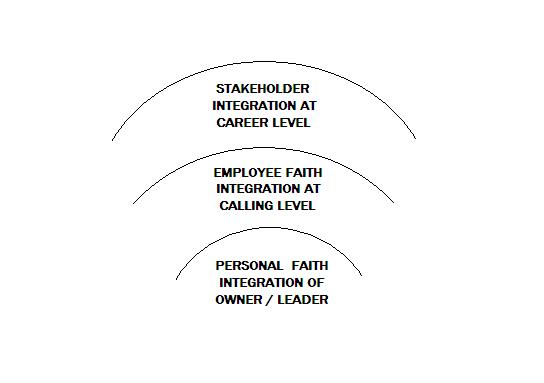
Figure 1 : Progressive Faith Integration Levels
I would propose that there are three progressive (each one assumes the previous) philosophical levels possible and they in some senses correspond to the three levels (or steps) of faith integration proposed in Professionals: Men and Women Partnering with the Trinity in Everyday Life. I also would propose that all three levels are very possible and easy to carry out at a sole proprietor level, but they become harder and less sustainable as businesses grow in size and complexity. It can be and is often done, but retaining the original flavor and design of faith integration rarely extends beyond the first generation of leadership in anything beyond family/privately held organizations.
Here are the details on the three proposed levels:
(1) Personal Faith Integration (Hang the vision statement on the owners office wall) – The owner or leader integrates faith as a career, calling and profession. But does not require the same of employees or other business stakeholders.
(2) Employee Integration (Hang the vision statement on the business office wall) – The owner or leader integrates faith as career, calling and profession. He also requires employees to hold to career and calling motivations. He does not require anything from other business stakeholders.
(3) Full ‘Public’ Integration (Hang the vision statement on the waiting room wall) – The owner or leader integrates faith as a career and calling and profession. He also requires employees to operate with both career and calling level. He expects that customers and business stakeholders will operate at a career level.
I would say that I have seen businesses do all three of these well and all three of these poorly. The opportunity to do poorly grows as the complexity of the business grows, as does the opportunity to really do a stellar job of impacting the Culture in meaningful kingdom building kinds of ways.
I’d love some outside perspective here as well if you have one …….
Blessings
-Rob
Vocational Poem
A woman in our church, Emma Vanhoozer wrote the following poem – Elementary Principles – for a recent worship service as we worked through the book of Galatians. I thought it showed an astute understanding of vocation as primarily “a call to relationship with the God of the Universe.” Here it is… Enjoy!
Elementary Principles
If you called me
To a job, something
Constructive, like building
An ark, or marching
Through a sea of salt, or scrubbing
Crusted blood from Temple court-
Yard cracks where it spilled, or maintaining
Fiberglass installation
Between the sanctity – the Fear –
And the sacrilege of drawing near
(Invisible thorns
Of glass that lodge inside
The lung) guard
The slim yard
You cannot
Cross –If you called me
To a job, somehow
I think I could bear it, perhaps
Succeed, or earn
My keep, at the least
Perish, but own responsibility.Yet,
You have called me
To a person
And the only responsibility
– Terrible mercy – is to be
Me (sacrilege)
And free.To ride on the ark
Of the covenant, walk
On the Galilean Sea, drink
The flowing sacrificial blood, cross
Through the fiberglass shards into
The Holy of Holies.Yes,
You have called me
To bear cosmic unemployment
My only work to wait for you
Waiting eternally upon me.
Course Materials for 12 Week Class
These are the class materials for an early Faith and Work Sunday School Class that used Doing God’s Business by Paul Stevens and Professionals as discussion texts.
Final Class – Work and Faith April 11th Don Flow Interview.mp3
Chapter 11 – Discussion Guide, Work and Faith Chapter11 mp3
Chapter 10 “Letting Life Speak” – Discussion Guide, Work and Faith Chapter 10 mp3
Chapter 9 “Being Creative” – Discussion Guide, Work and Faith Chapter 9 mp3
Chapter 8 “Cultivating Integrity” – Discussion Guide, Class Presentation,Class Discussion Chapter8 mp3
Chapter 7 “Going Deep” – Discussion Guide, Chapter 7 Class Discussion mp3
Chapter 6 “Globalization” – Discussion Guide
Chapter 5 “Marketplace Mission” – Discussion Guide, Chapter 5 Class Discussion mp3
Chapter 4 “Organizations & Spheres of Influence” – Discussion Guide, Class Presentation, Chapter 4 Class Discussion mp3
Chapter 3 “The Trinity & Prophets, Priests, Princes(ess)” – Discussion Guide
Chapter 2 “What is Calling?” – Discussion Guide , Class Presentation, Chapter 2 Class Discussion mp3
Chapter 1 “What Business is God In” – Discussion Guide

 the gospel-centered life @ work